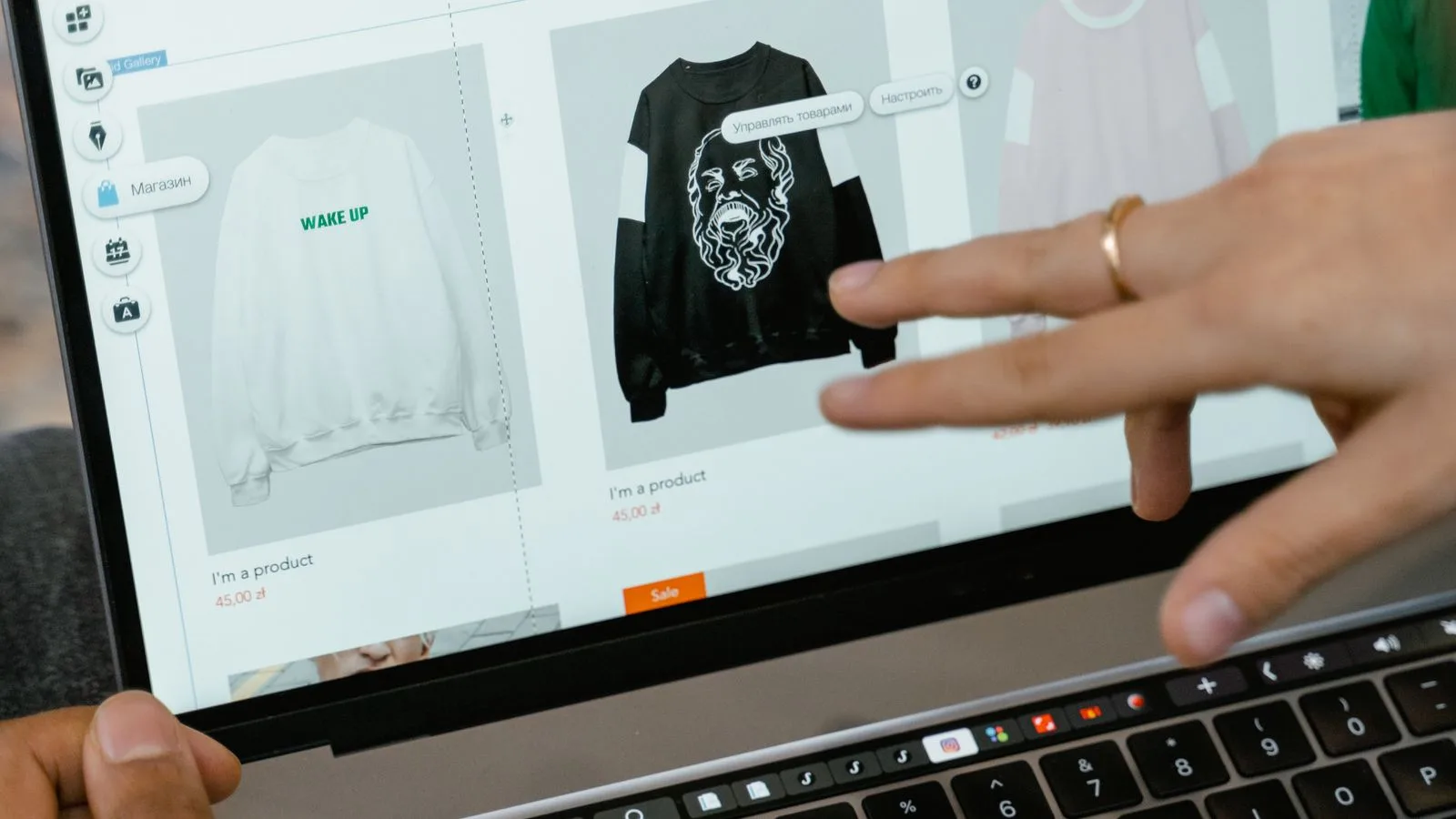
In modest fashion e-commerce, the customer cannot touch the fabric or try the fit. The decision is made by looking at a few photos on a screen. And because modest garments cover almost the entire body, the photo forgives nothing: a small ironing mark, a scarf in the wrong tone or poor lighting shows up directly in your sales.
The market itself is anything but small. According to the State of the Global Islamic Economy report, worldwide spending on modest fashion reached 347 billion dollars in 2024 and is expected to hit 444 billion dollars by 2029. Every modest fashion brand competing for that spend meets the customer in the same shop window: the product image.
This guide walks through the three ways to produce modest fashion product photos: shooting it yourself, working with a studio and a real model, and using AI with a virtual model. The prices are not guesses; they come from the current price lists of photo studios in Istanbul, one of the world's modest fashion capitals.
Four things that make modest fashion shoots different
1. The product covers the whole body. In an abaya, evening dress or tunic shot, every inch of the frame is product. Flaws that would hide in a t-shirt shoot have nowhere to hide here: ironing marks, loose threads, fabric bunching in the wrong place. Modest wear simply demands more preparation than other clothing categories.
2. The headscarf is its own discipline. The scarf has to match the dress, the wrap style has to look right, and the scarf must never steal attention from the product being sold. There is a reason professional studios bring in a dedicated scarf stylist for modest fashion shoots.
3. Drape and fit drive returns. The top return reasons in modest fashion e-commerce are "the fabric was thinner than it looked" and "it was shorter than expected". An image that honestly shows drape, length and fit prevents the return before the order is even placed. A ghost mannequin or flat-lay shot cannot show how fabric moves; on-model photos exist precisely for this.
4. Finding models is hard. The pool of models available for modest fashion work is small and agency calendars fill up fast. Some brands also prefer not to work with live models at all, whether for reasons of values or simply to avoid model contracts and image rights. It is one of the industry's least discussed but most real problems.
Option 1: Shoot it yourself
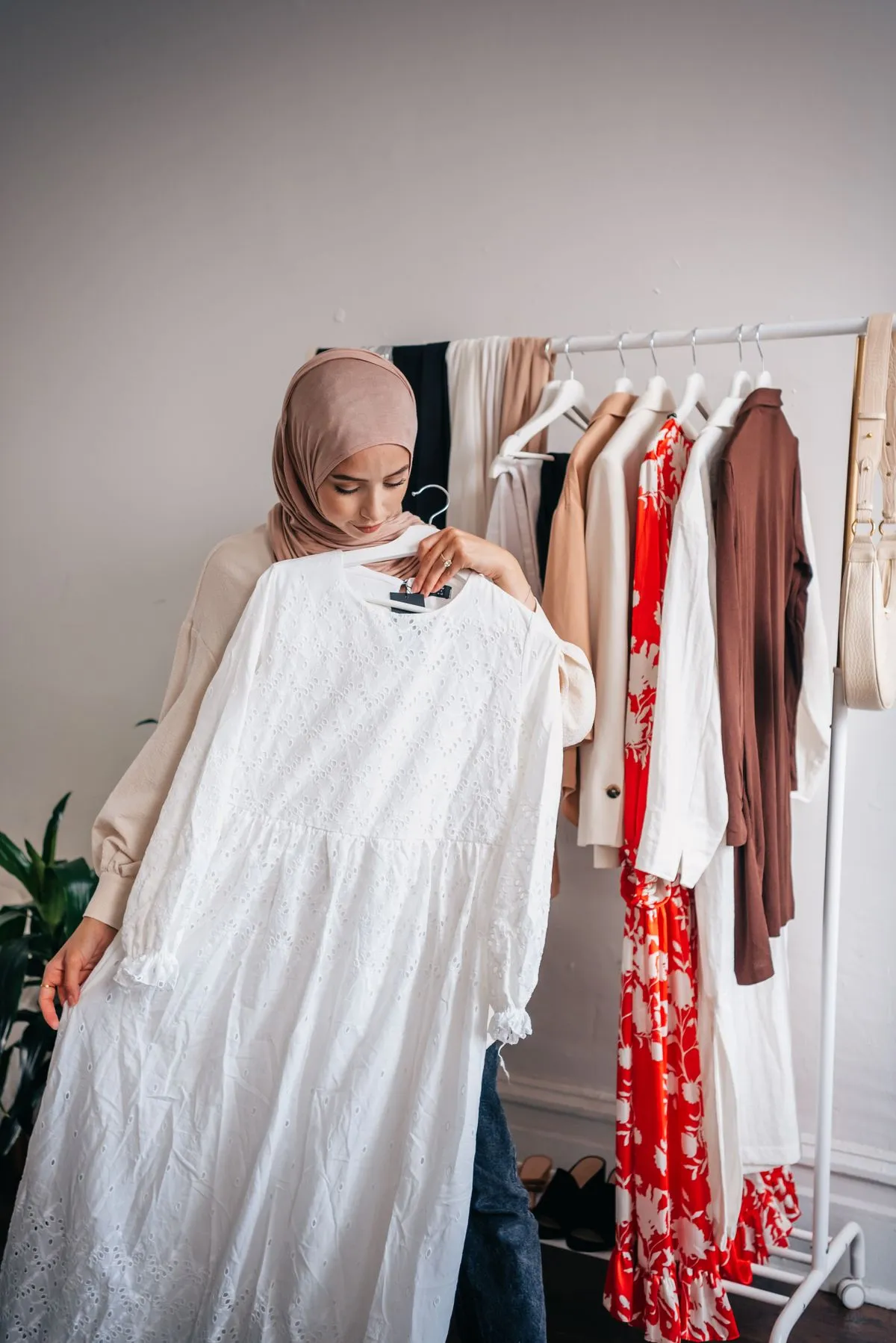
Most new boutiques shoot their first products themselves, and that is a perfectly good place to start: a white backdrop, a window with plenty of daylight and a steady phone will produce clean catalog shots. Dress the garment on a mannequin, remove the mannequin in editing, and you get the classic "ghost mannequin" look used across e-commerce.
The upside is cost and speed: you can reshoot any day you like and you depend on no one. For comparison, studios charge roughly 1,000 to 1,500 Turkish lira (about 25 to 35 dollars) per product for ghost mannequin work, while your own setup is a one-time equipment cost.
The downside is just as clear: a ghost mannequin cannot show how fabric actually falls, and it gives no sense of a full outfit. You cannot show how an abaya moves when the wearer walks. It is fine for catalog pages, usually not enough for storefronts and ads.
Option 2: Studio and a real model
The professional route is well established: samples are shipped to the studio clean and ironed, the model is booked at least three business days ahead, and on shoot day the styling, makeup and scarf work are handled by the crew. Retouched images are typically delivered within three business days in high resolution.
As of 2026, on-model photography in Istanbul runs 500 to 1,500 lira per product (roughly 12 to 35 dollars). A typical bulk package covers up to 40 products with the model included for 32,500 lira plus VAT, around 800 dollars, with 3 photos and 1 video per product. A fabric detail shot costs about 2,500 lira extra. A 40-piece seasonal collection, with details and extras, lands comfortably above the 1,000 dollar mark.
What you get in return is real: the highest production quality, the presence of a real person, the emotion that campaign imagery needs. For a seasonal brand campaign, a studio shoot still has no substitute.
The difficulty starts with the calendar. When the collection changes, the whole process restarts: sample shipping, model booking, shoot day, retouching. Booking a studio day for one new product rarely makes economic sense, so that product either waits for the season or goes live with a weak image.
Option 3: AI with a virtual model
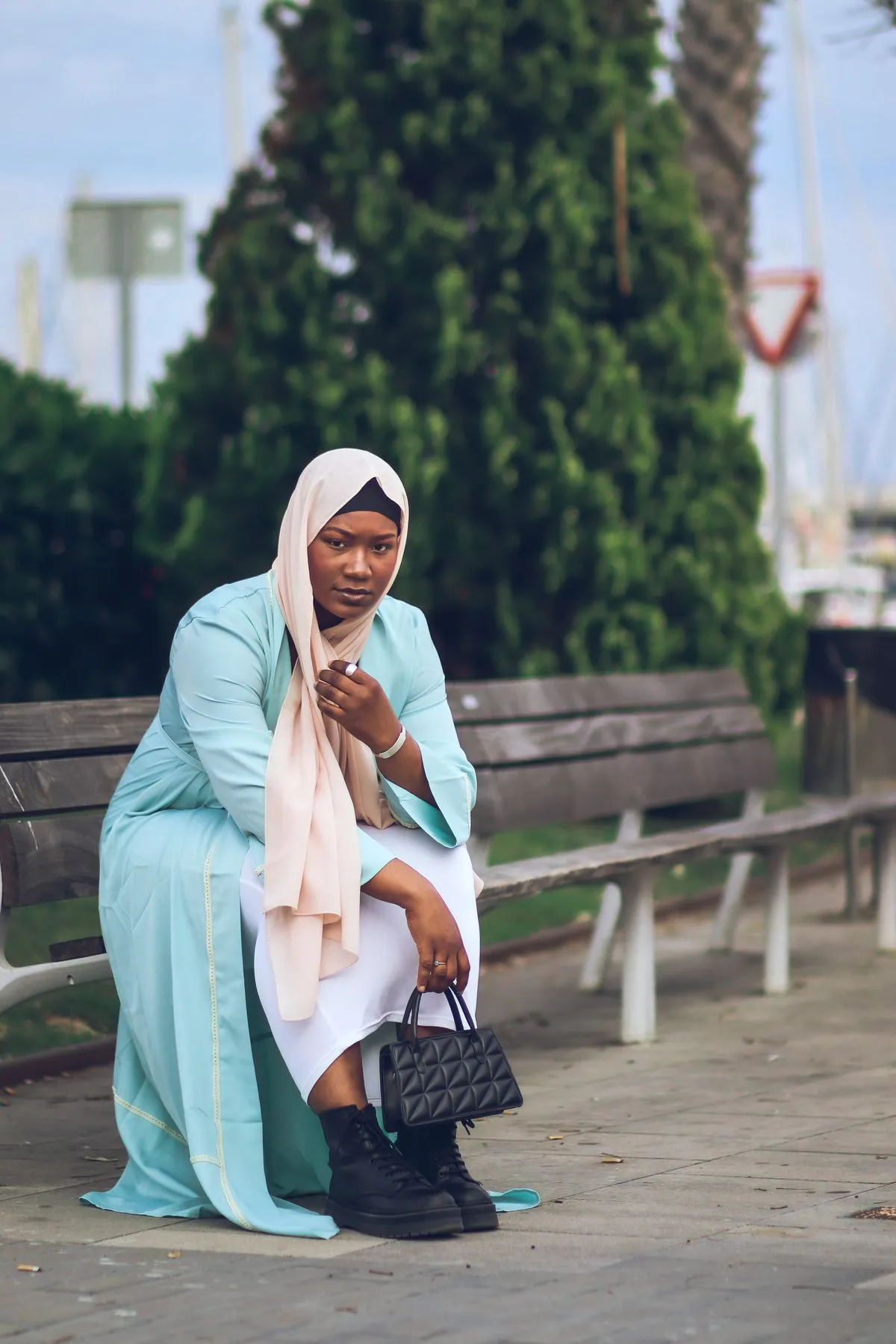
This is the new option of the last two years. You upload a plain photo of the product, pick a model, pose and scene from a ready library, and the system shows your garment on a realistic virtual model in minutes. No sample shipping, no model calendar. We covered how the technology works in our post on AI product photography.
For modest fashion there is an important caveat: general-purpose AI image tools make frequent mistakes with covered clothing. They loosen the headscarf, expose the neckline, change how an abaya drapes, or melt the fabric pattern into something similar but wrong. Modest fashion customers notice these mistakes instantly, and brand trust goes down with the image. Always test whether a tool was actually built for modest wear before committing.
At Wearon Studio we built a separate Modest Fashion Studio for exactly this need: models styled for covered clothing, scarf options that match the outfit, and a generation pipeline focused on fabric and pattern fidelity. The cost per product is a few credits, and you can try it first with a free demo account.
To be honest about the limits: AI does not replace everything. For large campaign shoots built on emotion and for brand identities built around a model's face, real photography keeps its place. But for the weekly e-commerce flow, the dozens of products going live every week, the speed and cost balance clearly favors AI.
Three things to check when testing an AI tool
- Pattern fidelity: Upload a floral scarf. Is the pattern preserved exactly, or replaced with something similar but different? Your customers know the pattern by heart.
- Coverage rules: Are the neckline, wrists and hairline faithful to the product's design? This is where general tools fail most often.
- Consistency: Can you reuse the same model and scene on the next product? A consistent storefront is worth more than individually pretty images.
What a 40-piece collection costs, three ways
Putting the numbers side by side makes the picture clear. For a seasonal collection of 40 modest fashion products:
- DIY: A one-time equipment cost of roughly 250 to 400 dollars for backdrop, lighting and a mannequin; after that, your time. Near-zero cost per product, but no on-model imagery, and expect two full days of work.
- Studio and model: Around 800 dollars for the package, over 1,000 dollars with detail shots and extras. With sample shipping and scheduling, the process spreads over one to two weeks. In return: top production quality.
- AI: A few credits per product; on-model images for all 40 products in a single day. When you need a color variant or a new pose, it takes minutes, not another shoot.
The balance most brands settle on: the whole collection goes live with AI imagery, and the 5 to 10 hero products that define the season get a studio shoot. That saves both the budget and the calendar.
Scene and backdrop: choosing the right atmosphere
Modest fashion customers do not just want the product to look beautiful; they want to see it in their own life. Choose scenes accordingly: simple interiors or street scenes for everyday abayas and tunics; dim, elegant settings for evening wear; outdoor scenes that carry the season for seasonal collections. Whatever the backdrop, two rules never change: the scene must not outshine the product, and the visual language must stay consistent across the collection. A storefront that shoots five products in five different worlds looks like a flea market, not a brand.
Which route fits which brand?
- New boutique: DIY for catalog shots, AI for storefront and on-model imagery. That is the fullest storefront on the smallest budget.
- Growing brand: AI for the weekly product flow; one studio shoot per season for the campaign. The two are complements, not alternatives.
- Established brand: The core collection in the studio; color variants, re-shoots and single products through AI.
Selling on marketplaces? Plan for their image rules
Marketplaces have strict image rules: main images usually require a plain light background, no text, logos or watermarks on the image, and low-resolution files are rejected before listing. The atmospheric storefront image you shot for your own site usually cannot double as the marketplace main image. Plan two sets per product from the start: clean marketplace-compliant shots, and styled scene shots for your own site and social media. Deciding this upfront is far cheaper than reshooting the whole collection later.
Whichever route you choose: the pre-shoot checklist
- Steam or iron every garment; wrinkles cannot hide on covered clothing.
- Check color accuracy; the tone on screen must match the tone in the delivery box.
- Standardize four angles: front, side, back and a fabric detail. Most return reasons are prevented by these four frames.
- Support size information visually; state the model's height and the size worn.
- Keep the scarf simple; if the product is a dress, the scarf plays backup, never the lead.
In modest fashion e-commerce, imagery is not an expense line. It directly sets your return rate, your conversion and the trust your brand earns. Which route you choose depends on your budget and your pace, but going live with weak images is no longer an option.
Frequently Asked Questions
How much does modest fashion product photography cost?+
As of 2026, Istanbul studios charge 500 to 1,500 Turkish lira (about 12 to 35 dollars) per product for on-model shots; bulk packages for 40 products start around 800 dollars plus VAT. With AI virtual models the cost drops to a few credits per product.
Can I shoot modest fashion products without a model?+
Yes. Ghost mannequin photography works for catalog shots, and AI virtual models can show the garment on a realistic model without hiring one, including fabric drape and a full outfit feel.
How should the headscarf be chosen for a shoot?+
The scarf should never steal attention from the product. If you are selling a dress or abaya, pick a simple scarf in a matching tone; feature patterned scarves only when the scarf itself is the product.
Can AI render the hijab correctly?+
General-purpose tools often break coverage rules: they loosen the scarf, expose the neckline or distort the drape. Systems trained specifically for modest fashion preserve coverage, scarf styling and pattern fidelity; always test with your own product first.