A virtual model is an AI-generated person who does not exist in reality but looks as convincing as a real one. You provide a plain photo of your garment; the system "dresses" the virtual model in it, in the pose and scene you choose. The result looks like a studio shoot that never happened.
The concept is new; the need is not. As we covered in our pricing guide, on-model photography runs 12 to 35 dollars per product and packages start around 800 dollars. Virtual models target exactly that cost and calendar: no model, no sample shipping, no shoot day.
How it works, in three steps
- 1. Upload a product photo. A flat lay, hanger or ghost mannequin frame all work; any clear, plain photo of the garment is enough. Even a frame shot with the methods in our model-free photography guide can be the input.
- 2. Pick the model, pose and scene. You choose a face, stance and location from a ready library. In good systems you can reuse the same model on the next product, which is how storefront consistency survives.
- 3. Generate and download. The AI renders the garment on the model in the chosen scene. The wait is measured in minutes; if you do not like it, you regenerate with another pose or scene.
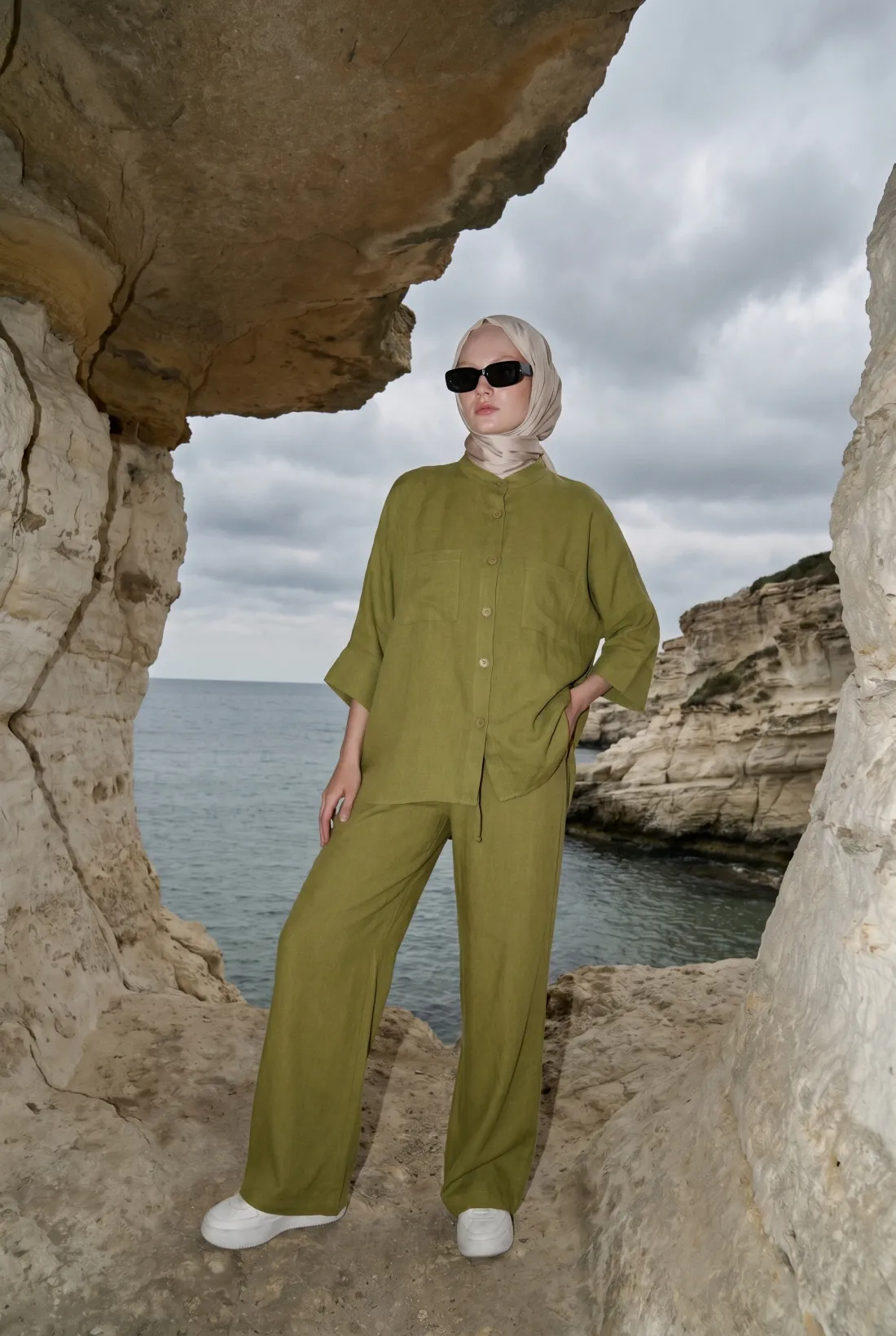
The image above is not a photograph; it is a virtual model frame generated by Wearon's Modest Fashion Studio. So is the cover of this article. It felt like the most honest way to answer the "show me an example" question: this is where the technology stands today.
Why it is spreading so fast
Cost: a few credits per image; at volume, well under one tenth of a studio shoot. Speed: a product can go live the day it arrives; there is no model calendar or delivery wait. Consistency: the same model, light and scene hold across hundreds of products, so the catalog looks like it came from one shoot. Variation: color variants, new poses and alternate scenes are derived in minutes, which makes ad A/B testing practically free.
Some industries have extra reasons. For modest fashion brands, virtual models solve the model-scouting and privacy questions at the root; we covered that side in the modest fashion photography guide.
Does it replace real photography?
The honest answer: not everywhere. Campaign imagery that defines a brand's face, and shoots built on emotion and story, remain the domain of real production. The virtual model's home turf is the daily e-commerce flow: product page images, collection storefronts, marketplace frames, social content and ad variations. The healthy setup is not a contest but a split: volume goes to AI, the season's 5 to 10 hero products go to the studio.
How to judge the quality of a virtual model image
- Pattern and fabric fidelity: the print must be preserved exactly; "similar but different" means returns and complaints.
- Cut preservation: length, silhouette and neckline must not change. On covered clothing, check the neck and wrist lines specifically.
- Hands and fingers: the classic weak spot of AI imagery; count the fingers, check the pose.
- Light coherence: the light on the garment must match the light of the scene; a mismatch reads as "pasted on".
- Model continuity: can you generate a second image with the same model? Storefront unity is worth more than one pretty frame.
Test these five points with your own product; demo galleries always show a tool's best frame, never yours.
The ethics: transparency and product fidelity
Using virtual models is legal and increasingly common; two lines matter. First, product fidelity: the fabric, print and cut the customer sees must match what arrives in the box. An image that flatters the product into something it is not is misleading, whatever technology produced it, and your return rate will tell you immediately. Second, personality rights: serious systems never use a real person's face without consent; models are generated fully synthetically. Every model in Wearon is created this way.
How it works at Wearon
The flow is the same three steps: upload the product photo, choose from the model and scene library, download in minutes. There is an E-Commerce Studio for classic fashion and a separate Modest Fashion Studio trained for scarf styling and coverage rules. Color variants and extra poses derive from the same product in one click. Open a free demo account to test with your own catalog, and run the five quality checks above on our outputs; we insist on it.
For the broader technology picture, start with AI product photography; keep the pricing guide nearby for the budget side.
Frequently Asked Questions
Is a virtual model a real person?+
No. A virtual model is generated by AI and does not exist in reality. Serious systems never use a real person's face without consent; the models are fully synthetic.
Is it legal to sell products using virtual models?+
Yes. The critical rule is product fidelity: the fabric, print and cut in the image must match what the customer receives. An image that misrepresents the product is misleading regardless of how it was made.
Will my garment be preserved exactly?+
In good systems, pattern, fabric and cut fidelity are the core goal of the pipeline; still, always test with your own product. Upload a patterned piece and compare the output with the original.
What does a virtual model image cost?+
A few credits per image; at volume, the per-product cost falls below one tenth of a studio shoot, with no model fees, sample shipping or delivery wait.